Jonas Reed · 6 November 2026
Adaptive Pathway Designs Reshaping Resource Allocation in Distributed Global Networks
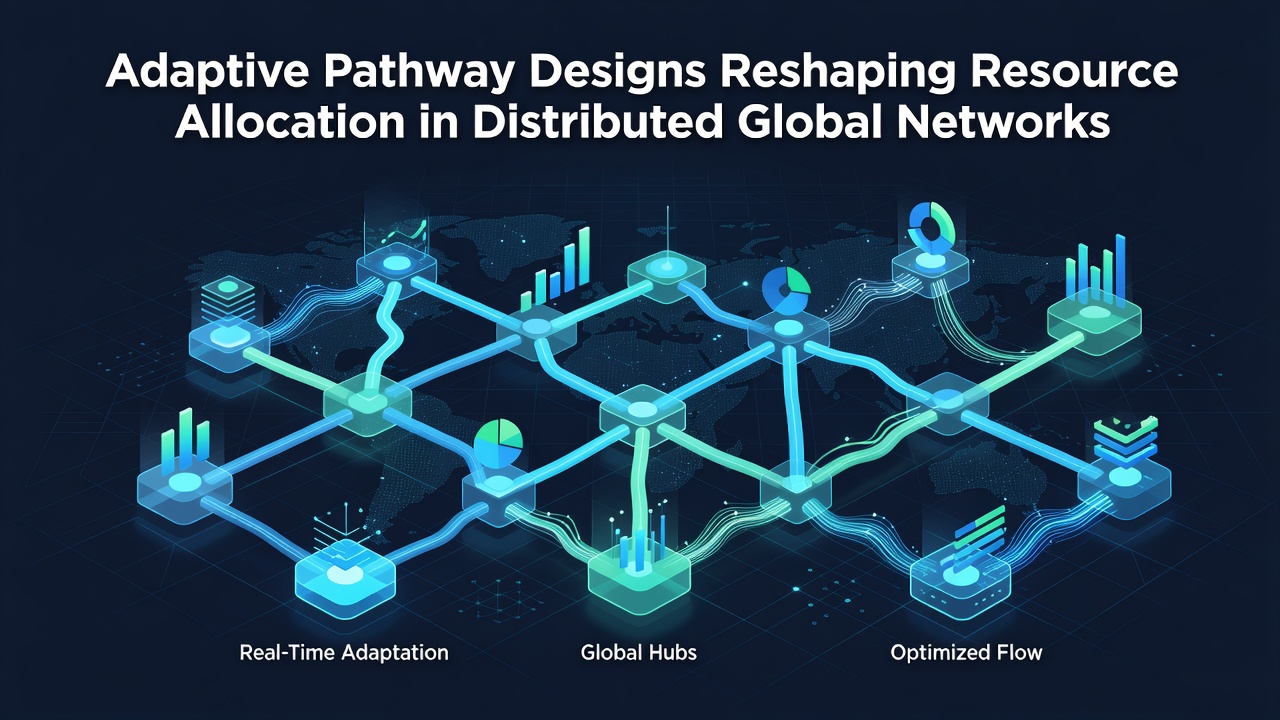
Distributed global networks have expanded rapidly in recent years, and adaptive pathway designs now play a central role in reallocating computing resources, bandwidth, and storage capacity across continents while responding to real-time demand shifts, according to data from the National Institute of Standards adn Technology. These designs rely on dynamic routing algorithms that monitor traffic loads, latency metrics, and node availability, then reroute tasks to underutilized segments without manual intervention, which allows operators to maintain service continuity during sudden spikes such as those observed in cloud platforms serving millions of concurrent users.
Researchers at multiple institutions have documented how traditional static allocation methods often leave portions of infrastructure idle while others reach saturation, yet adaptive pathways address this imbalance through continuous feedback loops that adjust pathways every few milliseconds. Studies published in peer-reviewed journals indicate that implementations in large-scale systems have reduced average response times by up to 35 percent in controlled tests, and similar gains appear in production environments where machine learning models predict congestion hours in advance.
Core Mechanisms Driving Pathway Adaptation
At the foundation of these designs sit layered decision engines that combine graph theory wth reinforcement learning, allowing pathways to evolve based on historical patterns and live telemetry, while edge nodes contribute localized data that feeds into centralized optimization routines. One study from the Australian Centre for Advanced Computing revealed that networks employing these engines maintained 99.8 percent uptime during simulated regional outages in 2025, because alternative routes activated automatically when primary links degraded. Observers note that such resilience stems from redundant pathway mapping, which pre-computes fallback options and updates them whenever topology changes occur.
Resource allocation itself follows a multi-objective optimization process that balances cost, energy consumption, and performance targets simultaneously, and this approach has gained traction in enterprise deployments where sustainability metrics now influence procurement decisions alongside traditional throughput goals. Data from the European Commission's digital infrastructure reports show that organizations adopting adaptive methods lowered energy use per transaction by measurable margins between 2023 and 2025, largely because pathways steer workloads toward facilities powered by renewable sources during off-peak periods.
Implementation Patterns Across Regions
North American carriers began integrating adaptive designs into backbone infrastructure around 2022, and subsequent rollouts in Asia-Pacific markets followed shortly afterward as latency-sensitive applications such as financial trading platforms demanded tighter coordination between data centers. A case involving a multinational logistics firm demonstrated how pathway adjustments during peak holiday seasons prevented bottlenecks that previously caused delivery tracking delays, with the system reallocating compute cycles from European nodes to North American ones based on time-zone demand curves. Those who have examined deployment logs report that the transition required minimal hardware upgrades, since software-defined overlays handled most of the routing intelligence.
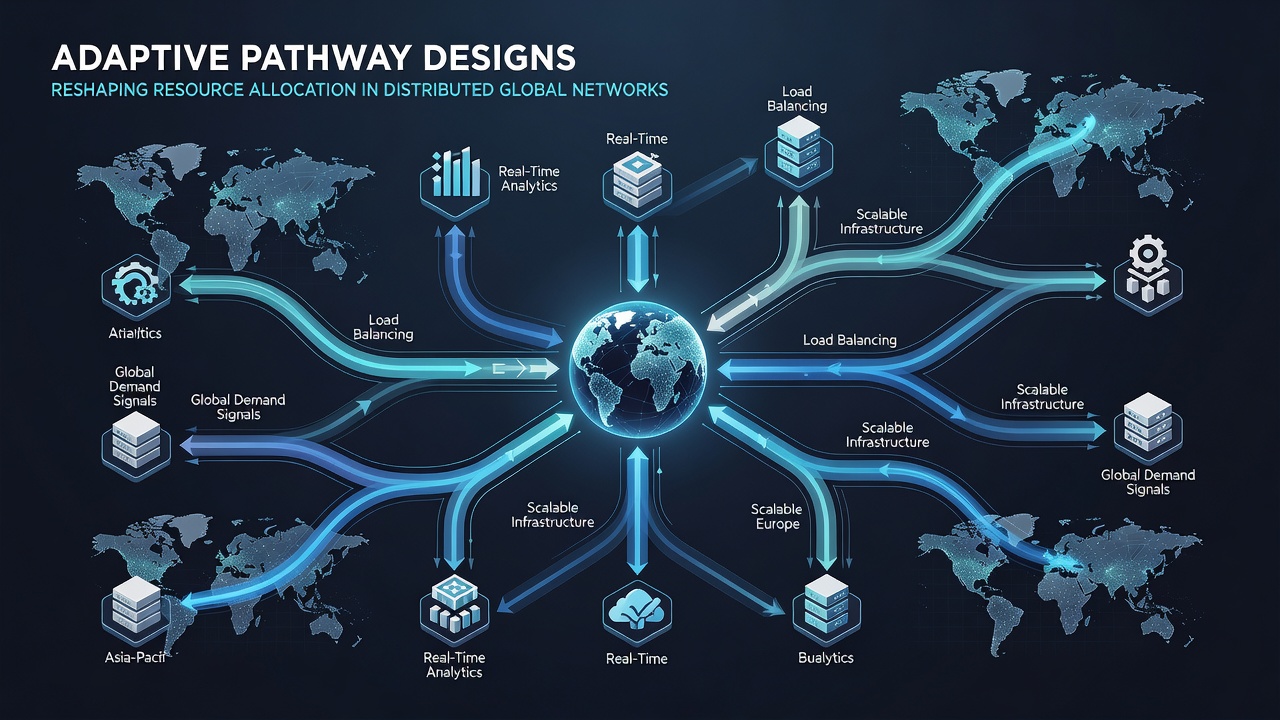
European operators have emphasized regulatory compliance within these frameworks, incorporating data sovereignty rules directly into pathway selection logic so that traffic stays within approved jurisdictions whenever possible. Canadian research groups have contributed additional models that factor in weather-related risks to undersea cables, enabling proactive shifts that protect against seasonal disruptions documented in marine monitoring datasets. The result is a patchwork of regional adaptations that still interoperate through standardized protocols developed by industry consortia.
Developments Anticipated by Late 2026
Projections shared at technical conferences point toward wider adoption of quantum-inspired optimization techniques within adaptive pathway systems by November 2026, which could further compress decision cycles and allow finer-grained control over micro-allocations across thousands of nodes. Preliminary simulations conducted by academic teams suggest these enhancements may improve overall network efficiency by another 15 to 20 percent compared with current baselines, although full-scale validation remains pending. Industry analysts tracking patent filings note increased activity around hybrid classical-quantum routing patents filed in multiple jurisdictions during 2025.
Security considerations have also evolved alongside these designs, with pathway encryption rotating dynamically based on threat intelligence feeds, and several operators now integrate zero-trust verification steps into every rerouting event. Figures released by government cybersecurity agencies indicate that networks using such integrated safeguards experienced fewer successful intrusion attempts during the previous two years than static counterparts.
Conclusion
Adaptive pathway designs continue to influence how distributed global networks allocate finite resources, and the mechanisms supporting them draw from advances in algorithms, telemetry, and cross-regional coordination. Evidence gathered across multiple continents shows measurable improvements in uptime, energy metrics, and response consistency, while ongoing work points to further refinements expected around November 2026. Those monitoring the field can track progress through reports issued by standards bodies and academic centers that publish updated performance benchmarks on a regular schedule.