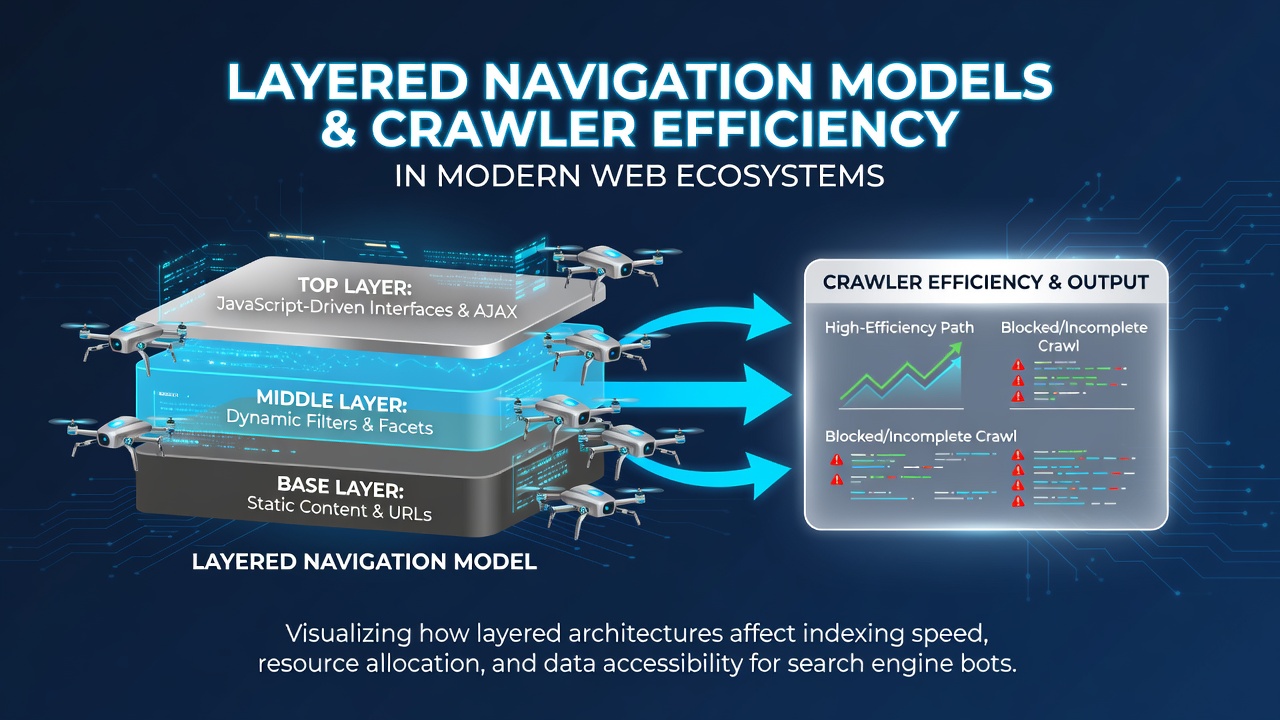
Jonas Reed · 11 September 2026
Layered Navigation Models and Their Impact on Crawler Efficiency in Modern Web Ecosystems
Layered navigation models organize website content through hierarchical filters and facets that let users refine results by combining multiple attributes at once, and this approach has reshaped how automated crawlers traverse large sites since the early days of dynamic web applications. Data from industry reports shows these systems generate extensive URL combinations when parameters stack on top of each other, which directly influences the rate at which search engine bots allocate their crawl resources across domains.
Core Components of Layered Navigation Systems
Modern layered navigation relies on query string parameters, category trees, and JavaScript-driven filters that create unique paths for each combination of selections, while backend databases serve the matching content without requiring separate static pages for every view. Observers note that e-commerce platforms and content aggregators adopted these models rapidly after 2015 because they improved user retention metrics, yet the same structures often produce duplicate or near-duplicate URLs when crawlers follow every link variant without restriction. Research from academic institutions indicates that parameter ordering and session identifiers further multiply the total address space, forcing bots to decide which subsets merit deeper exploration within their allocated time and bandwidth.
Crawler Behavior and Resource Allocation
Crawlers such as Googlebot and Bingbot follow a priority queue based on discovered links, historical change rates, and server response patterns, and layered navigation introduces thousands of low-priority paths that compete for attention during each visit cycle. When sites fail to implement canonical tags or robots.txt directives to consolidate signals, the bots spend cycles on redundant content that yields little new information, which reduces overall site coverage according to figures published by web standards organizations. In September 2026 several major platforms reported adjustments to their internal indexing pipelines that deprioritized faceted URLs lacking unique textual signals, a shift that highlighted ongoing challenges in balancing navigation flexibility with efficient discovery.
Those who manage high-traffic properties have documented cases where improper handling of layered filters led to crawl budget exhaustion within days of a site launch, leaving core pages unindexed for extended periods. The reality is that active management of URL parameters through tools like Google Search Console allows administrators to exclude low-value combinations while preserving the user experience, and similar controls exist in other regional search ecosystems.
Technical Mechanisms Affecting Efficiency
Server logs reveal that layered navigation frequently triggers repeated requests to the same underlying data when only sort order or pagination changes, creating patterns that sophisticated crawlers now detect and throttle. Experts have observed that implementing hreflang annotations alongside proper canonical chains helps distribute crawl effort more evenly across international versions of a site, whereas missing directives concentrate activity on default language paths. Studies conducted by research groups at various universities demonstrate measurable improvements in crawl completeness after sites adopted structured data markup that clarifies relationships between filtered views and their parent categories.
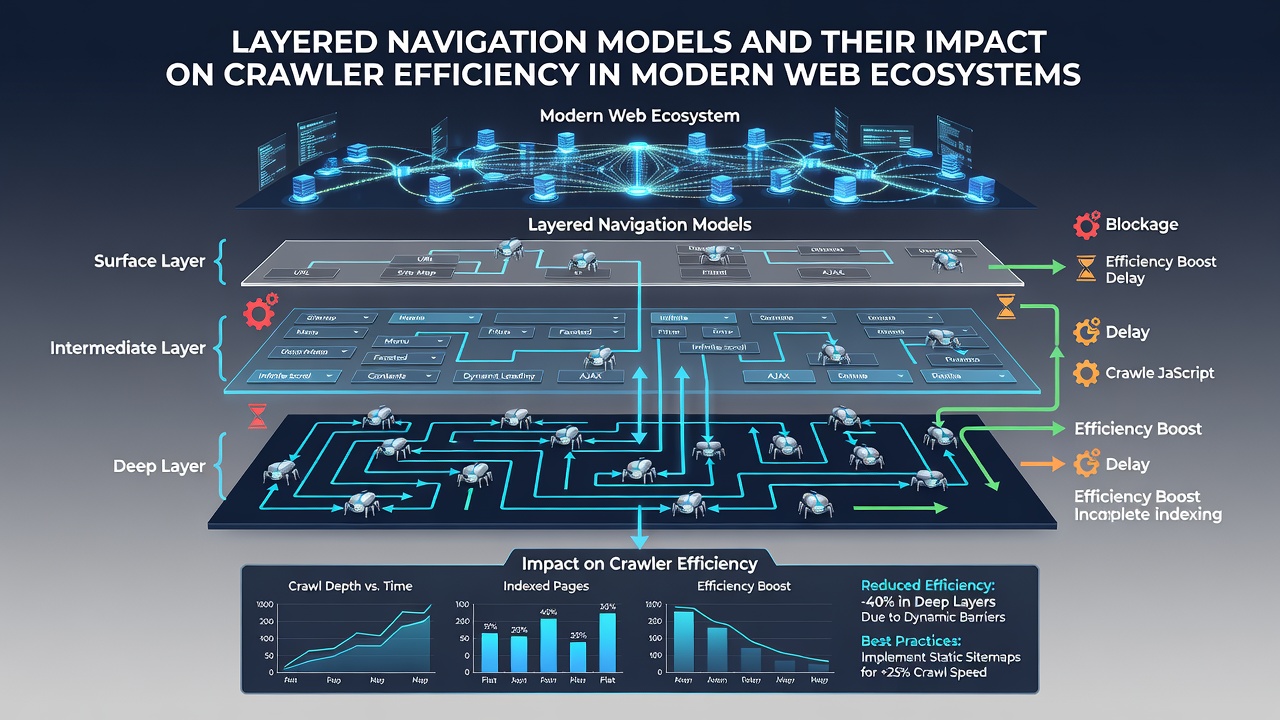
What's interesting is how JavaScript-rendered facets add another layer of complexity because crawlers must execute scripts to discover additional links, which consumes extra processing time compared with static HTML structures. Data shows that sites relying heavily on client-side navigation without server-rendered fallbacks experience slower indexing rates during periods of high bot activity, particularly when content delivery networks introduce variable latency.
Strategies Observed in Large-Scale Deployments
Organizations running extensive digital properties often combine robots meta tags with parameter handling rules inside their content management systems to limit crawler exposure to unproductive URL branches, and this practice has become standard in sectors where product catalogs exceed several hundred thousand items. According to documentation from Google developer resources, explicit configuration of crawl settings prevents unnecessary duplication while maintaining accessibility for genuine users who benefit from the layered filters. Another approach involves monitoring log files for patterns of repeated parameter sequences and then applying exclusions that preserve the most informative combinations.
Reports from the Association for Computing Machinery highlight that consistent use of sitemap files listing only canonical layered views can guide crawlers toward higher-value content, reducing wasted requests on filtered permutations that add no new signals. Those managing enterprise sites note that regular audits of navigation depth help identify when additional layers begin to degrade overall discovery speed.
Conclusion
Layered navigation models continue to shape the relationship between content accessibility and crawler performance across modern web ecosystems, with measurable effects on indexing speed and resource consumption that evolve alongside algorithm refinements. Continued attention to URL governance, structured signals, and log analysis remains central to maintaining balanced efficiency as these systems scale.